- Blog
- Importing Used EVs in Europe: How Costs & Process Differ from ICE Vehicles
Importing Used EVs in Europe: How Costs & Process Differ from ICE Vehicles
Here’s what car dealers should know about importing used EVs in the EU, from taxes and battery health to charging and warranties.
Each year, there are more electric cars on European streets. So, it is not surprising that more dealers are also looking across borders to source used EVs.
Importing a used EV from another EU country is similar to importing an ICE car, but there are a few extra points to check.
For instance, battery condition, charging compatibility, transport requirements, and local taxes can all affect the total cost of your imports.
Knowing how EV imports work will help you prepare for the process and estimate costs more accurately, so let’s see how it’s done.
De vigtigste pointer
- Importing a used EV within the EU follows a process similar to that for importing an ICE car.
- EVs may have lower registration taxes, but the exact costs depend on the destination country.
- You should check battery health, charging compatibility and connected services before buying.
Why cross-border used EV sourcing is a growing opportunity for dealers
EV adoption rates are rising in most EU countries, and there’s also demand for used EVs.
But since there are fewer used EVs available than ICE cars in most markets, many traders have found it helpful to import used EVs from other EU members.
And why is that? Because cross-border sourcing can help you:
- Get a wider selection of models and battery sizes
- Find more ex-lease and company cars
- Source popular EVs that are hard to find locally
- Offer newer and emerging EV brands
If importing EVs sounds like something you’d like for your dealership, you’ll be glad to know that importing a used EV is not much different from importing an ICE car.
EV vs ICE car import - a comparison
The main import steps are similar. You still have to transport the car, collect its documents, complete any required inspections, and register it in the destination country.
The biggest differences appear when you calculate taxes and assess the car’s condition.
To help you compare the two, here’s a quick overview of the main differences between importing an EV and an ICE car.
|
Area |
Used ICE vehicle |
|
|
Registration taxes |
Often reduced due to zero CO₂ emissions |
Often based on CO₂, fuel or engine size |
|
VAT |
Standard EU vehicle VAT rules |
Same |
|
Technical inspection |
No exhaust test; electrical and high-voltage systems may be checked |
Emissions and combustion-system checks |
|
Paperwork |
Standard registration and conformity documents (battery records are useful but usually optional) |
Standard registration and conformity documents |
Taxes - How EV taxes and incentives differ
EVs often receive tax advantages, which makes them a cost-effective option.
However, these savings usually come from national registration and ownership taxes rather than from the basic EU import process.
CO₂ and registration taxes
Many EU countries include CO₂ emissions in their vehicle registration taxes.
Since EVs have zero CO₂ emissions, they may qualify for:
- A lower registration tax
- An exemption from the CO₂-based part of the tax
- Lower annual road tax
ICE cars, especially those with powerful engines, are often charged more in these areas.
Still, that doesn’t mean that EVs will always be cheaper to register.
Some countries also calculate charges according to the vehicle’s:
- Purchase price
- Weight
- Motor power
- Age
- Original list price
As EVs are often heavy and can have powerful electric motors, these calculation methods may reduce the tax advantage, so always calculate the costs before buying.
VAT, customs and subsidy eligibility
For VAT purposes, EVs are generally treated in the same way as petrol and diesel cars.
Essentially, VAT depends on the following:
- Whether the buyer and seller are VAT-registered businesses
- Which VAT scheme is used (standard or margin)
- Whether the car is new or used
EVs also follow the same rules regarding customs duties.
You won’t pay customs duty when moving a vehicle between EU member states, but you may have to pay customs duty when importing a car from outside the EU.
However, EVs are different from ICE cars in terms of subsidies.
Unlike ICE cars, EVs may qualify for purchase or registration incentives.
Depending on the country, these may only be available for:
- New vehicles
- Private buyers
- Vehicles below a certain purchase price
- Cars being registered in that country for the first time
Because of these limitations, a used EV may receive lower support or no purchase subsidy at all.
That’s why you should always check local EV rules before buying.
Origin - do the EU’s Chinese-EV tariffs affect you?
There are now many Chinese EV brands in Europe.
The EU introduced extra duties on EVs imported from China after finding that Chinese producers benefited from unfair subsidies. The measures have been in effect since October 2024.
However, if a used Chinese-made EV has already cleared customs and been registered in an EU country, you don’t pay the tariff again when moving it to another member state.
So, dealers trading used Chinese EVs within the EU aren’t directly affected.
Transport and logistics differences
From a legal point of view, transporting an EV within the EU is mostly the same as transporting an ICE car.
If you use a carrier, the shipment should have a CMR consignment note.
If you drive the car yourself, you will need valid plates and insurance.
However, there are a few technical differences to keep in mind, most of which concern the battery.
First, you should make sure the EV has enough charge for loading and unloading.
A completely discharged battery can make the car difficult to move.
If you plan to drive it to the destination, also check:
- If the charging cables are included
- If AC and DC charging work
- Which connector and charging standard the car uses
- If suitable charging stations are available along the route
And if you’re interested in importing damaged vehicles, you should take extra care with EVs because battery damage can create fire and electrical risks.
You should tell the carrier about the damage before the truck collects the car, as the battery may need to be checked and the EV may require special transport.
The extra checks an EV needs
Mileage, service history, bodywork, and documentation are the standard elements you should inspect in every vehicle.
But because EVs come with different technology and features, there are a few extra details you’ll need to look into.
Battery State of Health (SoH)
Battery State of Health (SoH) describes how much capacity the battery still has compared with its new capacity.
As a general rule, 80% or more is usually acceptable for a used EV.
A lower SoH may still be fine for an older car or one with higher mileage.
On eCarsTrade, if an SoH report is available for a vehicle, you’ll see it directly in the car listing.
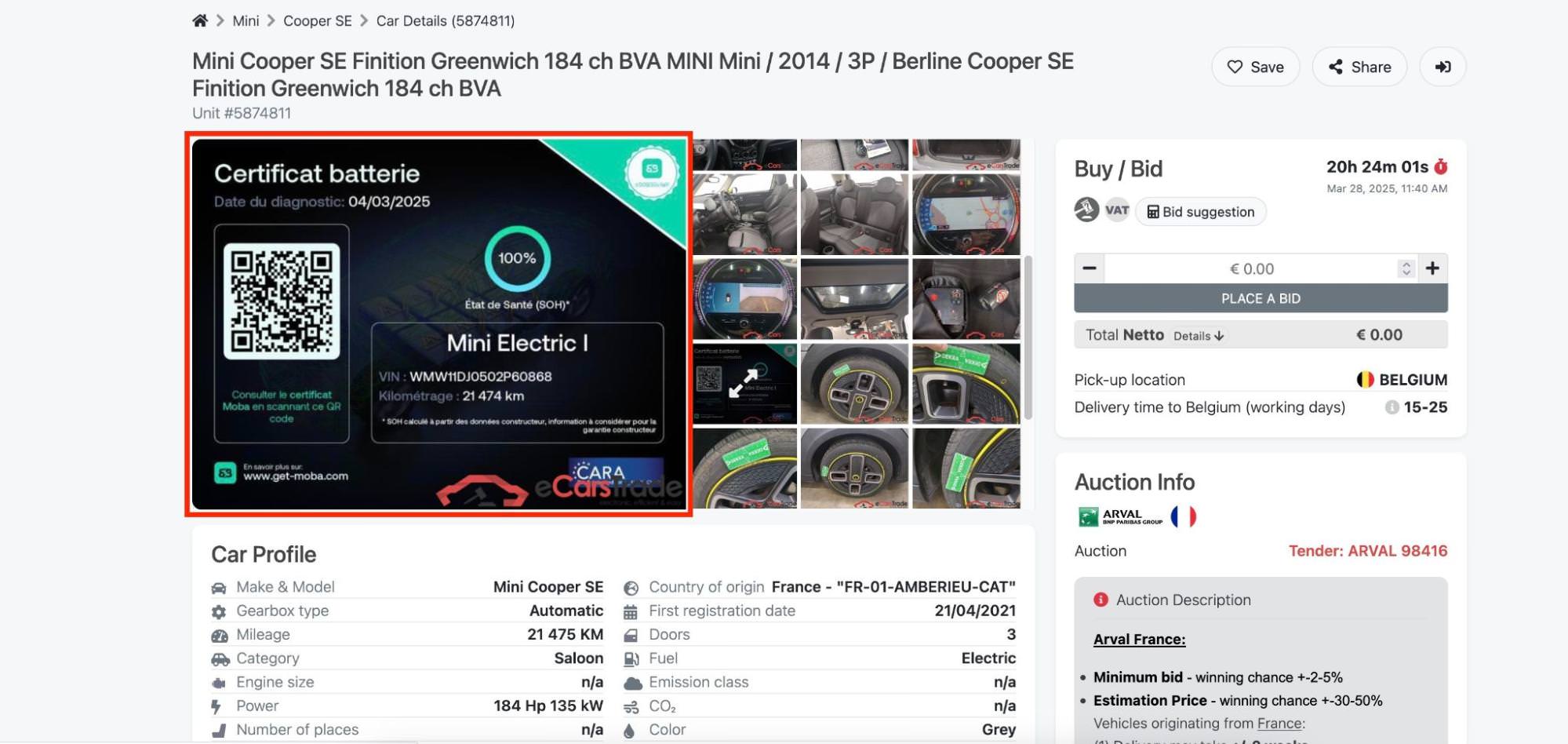
You should treat it as a useful confirmation, not the only measure of battery condition.
EU Battery Passport
The EU Battery Passport is not active yet. It will become mandatory for new EV batteries from 18 February 2027.
EVs produced before February 2027 will not need the passport.
New EVs will receive a scannable digital passport with battery information.
The passport will stay with the battery, so it will still be available when the car is later resold as a used EV.
Charging standards and connectors
The EU supports multiple EV charging standards, but most EVs use Type 2 for AC charging and CCS2 for DC fast charging.
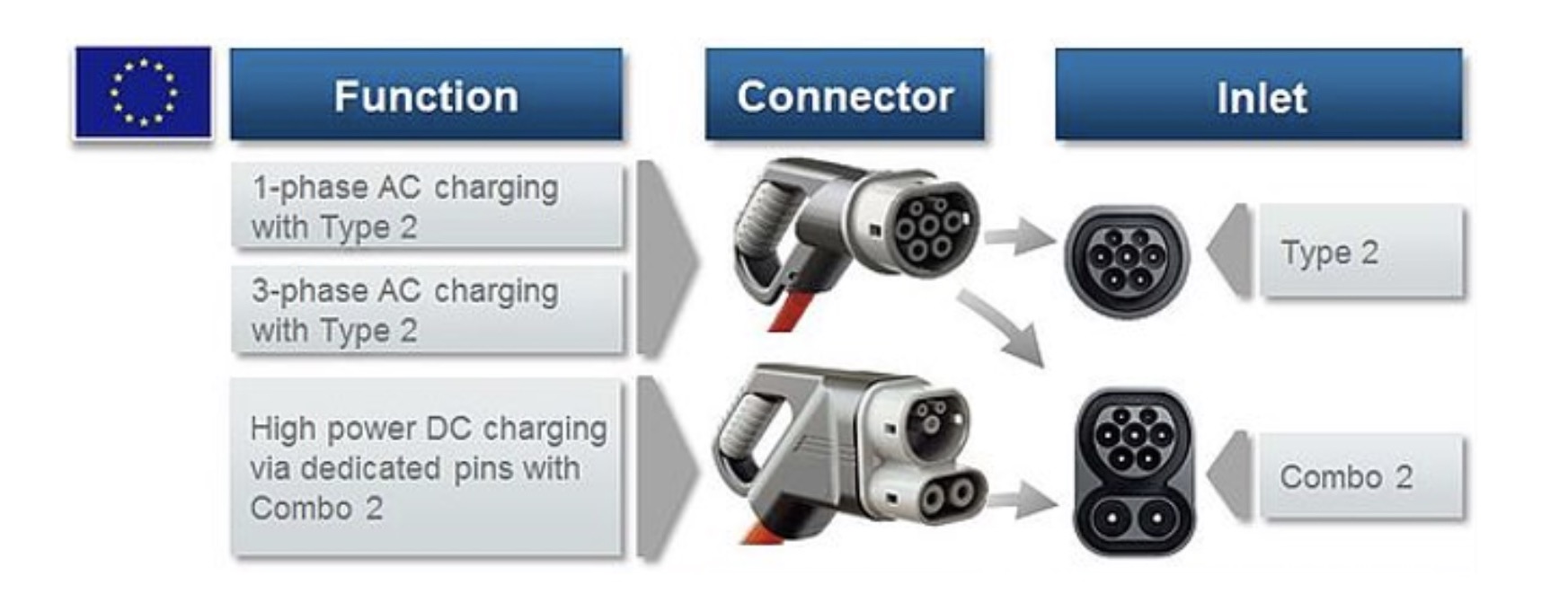
Source: European Commission
You should check the connector fitted to the vehicle and confirm the maximum AC and DC charging speed.Also, verify if the charging cable is included.
Warranty, apps, and connected services
When a buyer buys an EV, they want to be able to use all of its features.
Because of that, check whether the car can be added to a new owner’s account and whether all features in the manufacturer’s app will still work.
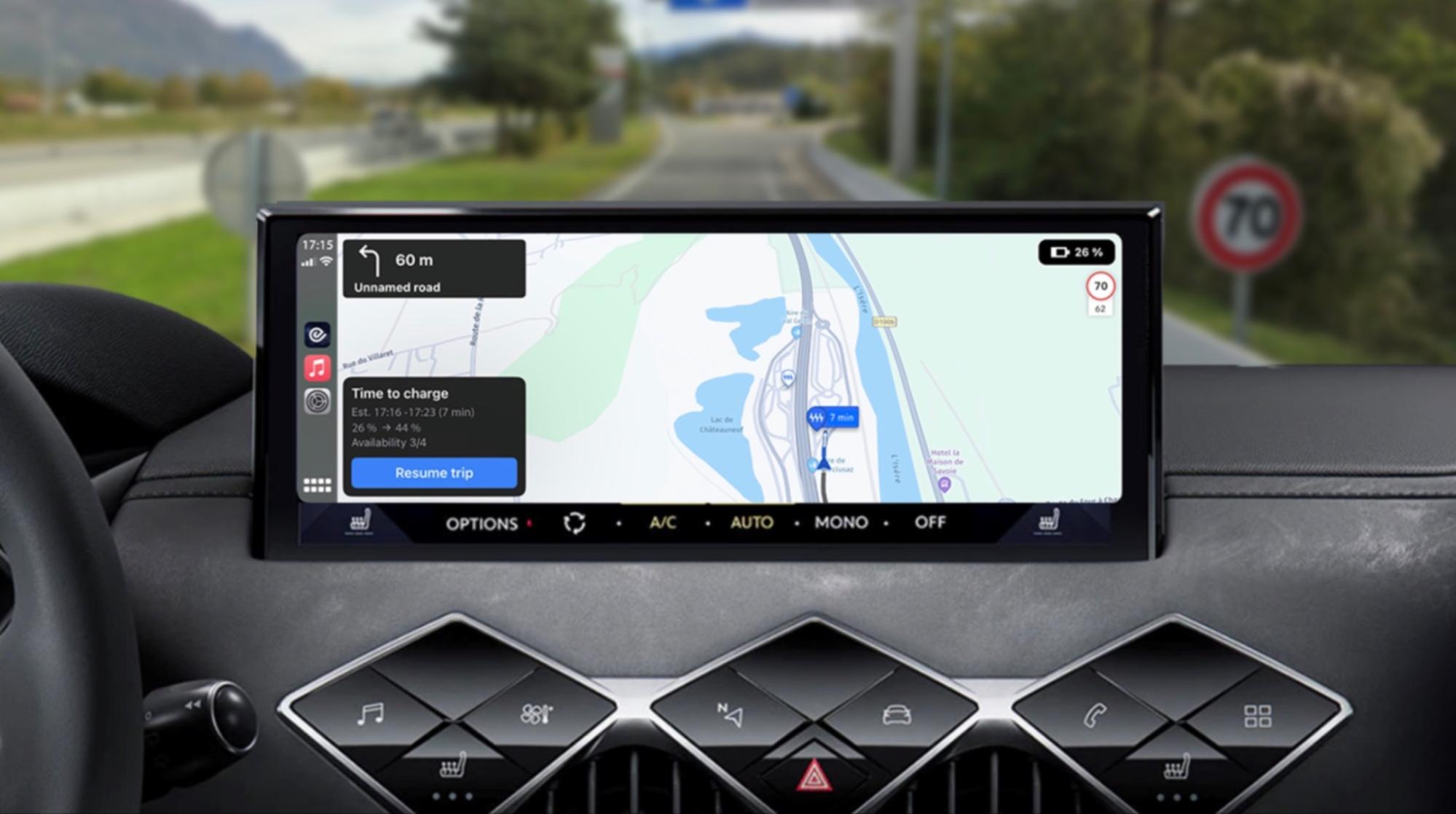
Connected EV features through the manufacturer’s app
Also confirm which remote features, software upgrades, and subscriptions will still work after the ownership transfer.Finally, check the battery warranty and whether the car has a leased battery.
Look at the start date, mileage limit, and whether the warranty transfers to the next owner.
Most battery warranties are transferable, but the terms vary by brand. Check how much coverage is left, so you can mention it to future buyers.
FAQ
Do I pay customs fees when importing an EV from another EU country?
Customs duty usually isn’t charged when importing an EV from one EU member country to another.
Customs duty may apply if you’re importing an EV directly from a country outside the EU.
Do EV subsidies apply to imported electric cars?
This depends on the destination country, but in most cases, purchase subsidies apply only to new EVs registered for the first time.
However, a used EV may still qualify for lower registration tax or road tax.
What battery percentage is considered acceptable by the SoH?
There’s no universal threshold, but 80% or more is usually a good result for a used EV.
Is a used EV from another EU country subject to VAT in the country of registration?
It depends on the VAT scheme.
Under the standard VAT system, the seller usually invoices the car without VAT, and the buyer reports VAT in their own country.
Under the margin scheme, VAT is already included in the price and is not paid again in the destination country.
eCarsTrade tilbyder online bilauktioner med tidligere leasede køretøjer fra Europa!